
Now Meeting Sundays at 10 am | Canton, Ohio
Fire in the Desert
In the fourth century, Christians walked away from civilization and into the desert. Not in defeat, but in hunger. They left everything to find what the noise of the world had drowned out: the indwelling presence of Christ in the inner temple. Discover why the Desert Fathers and Mothers embraced silence, solitude, and suffering, and what they found in the wilderness that we desperately need today. Their path may seem extreme, but their discovery was simple: the Kingdom is within, and it's waiting to be found.
THE INNER TEMPLE
Scot Lahaie
10/22/20256 min read
In the fourth century, something strange began to happen. Christians started walking away from the cities. Not in defeat. Not in despair. But in hunger.
They left behind comfort, community, and safety. They walked into the Egyptian deserts, the Syrian caves, the barren wilderness where nothing grew and no one came. They traded civilization for solitude, noise for silence, the crowds for the vast and terrible quiet of the sand.
Why would anyone do this?
Because they sensed something slipping away. As Christianity gained favor and social respectability, many began to fear that the fire of the upper room had grown harder to hear. The Holy Spirit had not vanished, but the noise of the world had grown louder. The way was being lost. So they left. Not to escape the world, but to find what the world could no longer offer: the deeper encounter with God Himself.
These were the Desert Fathers and Mothers, the pioneers of Christian interiority. In the silence of the sands and the stillness of the caves, they discovered a path to the inner temple, just as Christ had promised. It was not written in ink, but carved into the rhythms of fasting, solitude, stillness, and ceaseless prayer. They called it hesychia, holy quietness, but this silence was not empty. It was charged with presence. In that sacred quiet, distractions were stripped away, and the soul found itself face to face with God.
From our perspective in the twenty-first century, it appears these early ascetics were rejecting the world, as if they were incapable of holding jobs or being productive. But in a biblical sense, they were putting the world behind them. Scripture clearly teaches such things. John wrote, "Do not love the world or anything in the world. If anyone loves the world, love for the Father is not in them." Paul wrote, "Do not conform to the pattern of this world." Jesus declared, "In the same way, those of you who do not give up everything you have cannot be my disciples." This radical truth frightens most Christians today. Following Jesus may require us to relinquish worldly possessions, abandon familial relationships, and forsake selfish priorities that conflict with God's kingdom.
Yet to reduce their journey to a single act of obedience is to overlook the fullness of what they discovered in the desert. Rejecting the world was just part of the journey. Their singular focus was on finding the inner temple, the Kingdom within. They fought demons in the desert, not with swords, but in the spirit. They battled their own thoughts, laid down their reputations, and embraced obscurity, all to find Christ within. And in that place of emptiness, they became full. Jesus said it clearly, "Those who try to gain their own life will lose it; but those who lose their life for my sake will gain it." These ascetics found the life of Christ, and they found it in the inner temple, providing us with a model to follow.
To the modern reader, the lives of these saints may seem extreme, but to them, it was the only logical response to a God who had taken up residence within. If the Spirit truly dwelled in the inner man, then there must be a way to meet Him there. The cave became a classroom. The fast became a feast. The silence became a sanctuary. This was not escapism or self-mutilation or even deprivation for its own sake, as many in our age would believe. Rather, it was apprenticeship. This was not monasticism as withdrawal, but as radical nearness to the indwelling Christ driven by a hunger for the divine.
The legacy of these spiritual giants lives in the sayings they left behind, short, piercing, and full of fire. Abba Anthony once said, "Just as fish die if they stay too long out of water, so the monks who loiter outside their cells or pass their time with men of the world lose the intensity of inner peace. So like a fish going towards the sea, we must hurry to reach our cell, for fear that if we delay outside, we will lose our interior watchfulness." Abba Poemen taught, "He who sits alone and is quiet has escaped from three wars: hearing, speaking, seeing; but there is one thing against which he must continually fight: that is, his own heart." Abba Macarius declared, "This is the truth: if a monk regards contempt as praise, poverty as riches, and hunger as a feast, he will never die."
Stillness is not a void. It is the threshold of encounter. Their words were not theory. They were testimony, fruit born of deep interior labor, and they echo across the centuries as witnesses to a kind of faith we have largely forgotten: a faith that trains the soul through solitude, that prizes communion over performance, and that believes transformation happens not in public but in secret.
Perhaps the most interesting observation we could make about the inner life experienced by these pioneers of the Christian Faith is this: their goal was never to just be still and quiet. Rather, they pursued an inward life full of sights and sounds and heavenly visions. Their spirits soared in the heavenlies providing a rich and rewarding tapestry for their souls. The quiet was on the outside, but on the inside, what Paul called the inner man, there was a celestial party going on, and Jesus was at the center of it all. This is the great reward of finding Christ within.
Yet not all who discovered the inner temple did so by choice. While the Desert Fathers and Mothers entered the wilderness voluntarily, others were cast into it, thrust into exile, confinement, or suffering beyond their own control. Among these reluctant pilgrims was a man whose cell was not a cave but a pit, whose silence was not chosen but imposed. His name was Gregory.
St. Gregory the Armenian, also known as Gregory the Illuminator, stands as one of the most striking witnesses to this involuntary path. In his effort to win the heart of King Drtad III to Christ, Gregory was accused of treachery and condemned to a pit, a deep, stone prison carved into the earth. There he remained for over a decade, cut off from the world. His only water came from the damp that seeped through the walls. His only sustenance was a single loaf of bread lowered each day by a widowed woman, drawn by a divine impulse she could not explain. It was enough to keep his body alive. But the greater miracle was what happened within. Gregory did not wither in silence. He turned inward and found the indwelling Christ.
While the world forgot him, Gregory lived not in a dungeon, but in the inner temple. In the hush beneath the earth, he feasted with the Lord and communed with angels. The pit became a sanctuary. The exile became an altar. Above ground, the king who had imprisoned him descended into madness. Stricken by a sudden and terrifying affliction, Drtad's body convulsed and his mind unraveled. Some accounts say he fled into the wilderness, raving like a beast. All cures failed. Then, in a vision from God, the king's sister was told that healing would come from the very pit he had sealed. The guards returned, opened the dungeon, and found Gregory alive, his face radiant, like Moses descending from Sinai. He was brought before the king, laid hands upon him, and prayed. The healing was immediate. The madness lifted. The king was restored. And with him, a nation. Armenia became the first kingdom in history to proclaim Christianity as its official faith.
This is the power of transformation found in the inner temple. It is not merely a place of survival. It is a crucible of glory. Gregory's story reminds us that the path inward is not reserved for mystics in the desert, but is open to any soul, buried, broken, or bound, that dares to seek Christ in the secret place.
The whole of the church may not be called to follow the Desert Tradition as practiced in these early centuries, but the lives of these saints still remind us that the inner life must be cultivated. Such inner richness does not flourish by default. It must be protected from noise, nourished by quiet, and tended by discipline. This is not just an optional way to experience God, good for some, not so good for others. When Jesus declared that the Kingdom of God is within, he didn't follow it up with a caveat statement or a list of other options. There is one way to the Father, and that is through Jesus Christ the Son, and the words of the son make it very clear: "when you pray, go into your inner room, close your door, and pray to your Father who is in secret; and your Father who sees what is done in secret will reward you."
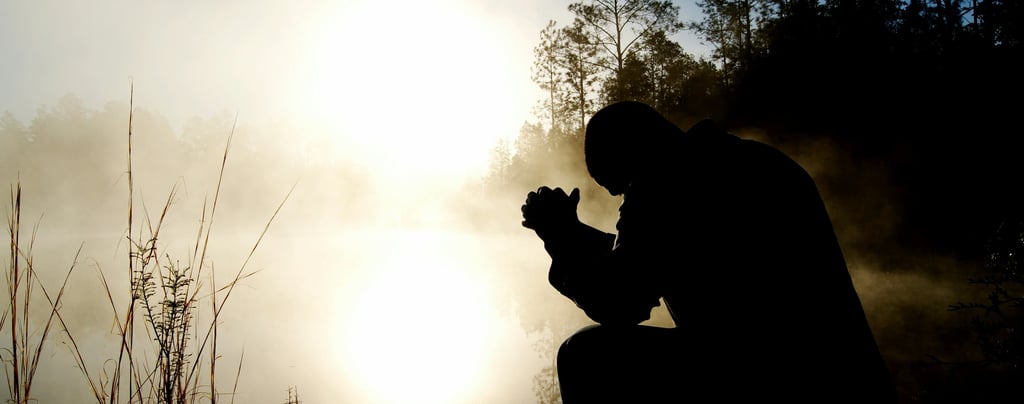
In a world addicted to distraction, the wisdom of the wilderness speaks again: Go inward. Be still. Quiet the noise. Let silence speak. The Spirit is waiting.
Pastor Scot
the FURNACE
Christian Fellowship
Canton, Ohio 44721
info@TheFurnaceCF.org